Xiong'an Xinyu Technology Co., Ltd.
FOCUSED ON TOP QUALITY MASTERBATCH PRODUCING
How to Select Opening Masterbatch and Slip Masterbatch in Film Production: Precise Matching from Fun
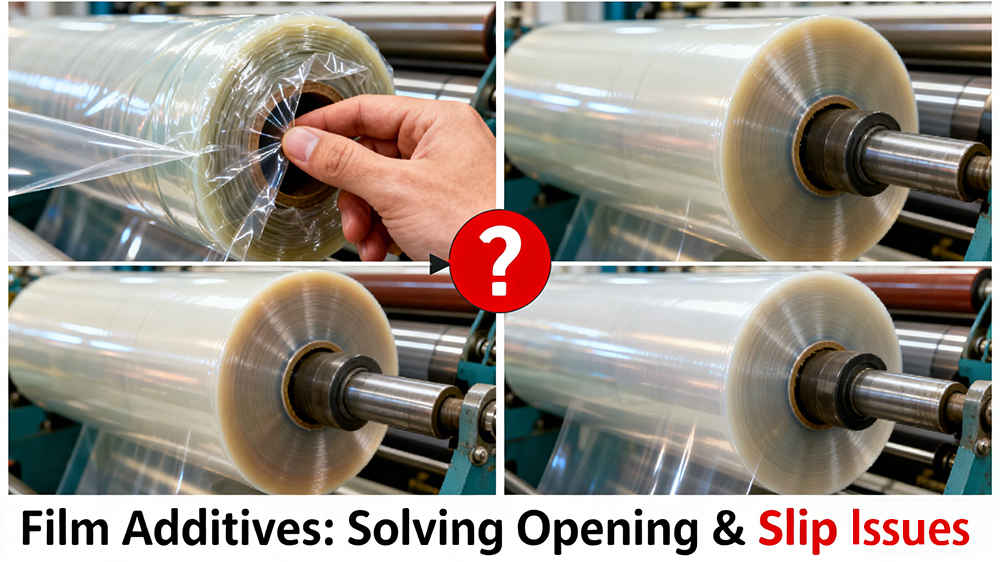
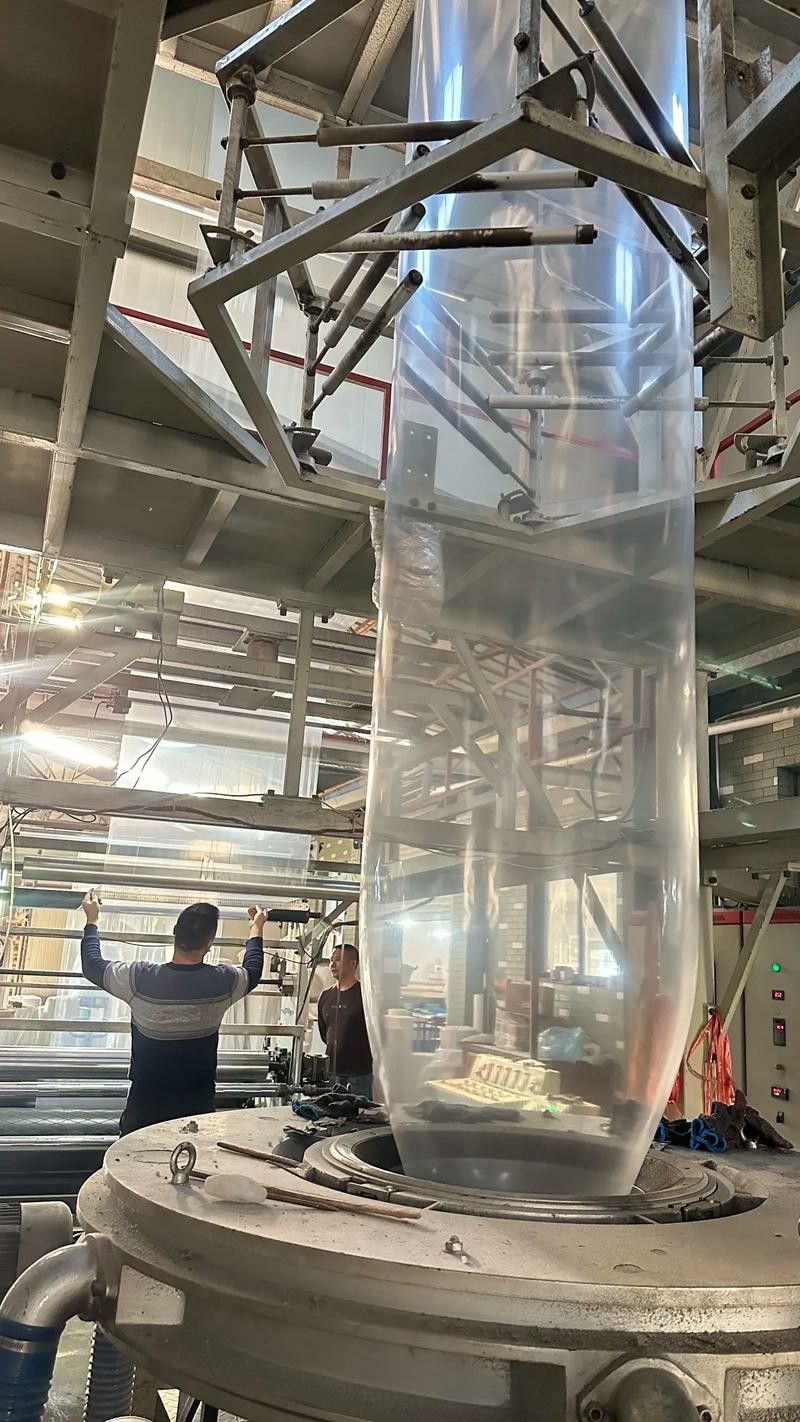
In film production, "difficulty in opening" and "poor slip performance" are two common pain points: films stick together during winding, film materials get stuck and torn during high-speed packaging, and they are hard to unfold during end use... The core solution to these problems lies in two key additives - opening masterbatch and slip masterbatch. However, their functions overlap and also have their own focuses. How to accurately select them according to the film type, process and scenario requirements?
I. First, Understand: The Core Differences Between Opening Masterbatch and Slip Masterbatch in Films
Opening Masterbatch: Solving Film Adhesion Through "Physical Isolation"
The core function of opening masterbatch is to form uniform micro-protrusions (similar to "small fulcrums") on the film surface, reducing the inter-layer contact area and fundamentally avoiding adhesion caused by vacuum sealing.
Core Components: Mainly inorganic particles (such as silica, talc powder), some are supplemented with a small amount of organic slip agents;
Key Characteristics: Non-migratory (components are stably distributed inside the film), with little impact on film transparency and heat-sealing performance;
Typical Effects: Enabling easy separation of stacked films, especially suitable for thin films (≤20μm) that are easy to attach (such as PE cling film, CPP food film).
(II) PP Films (Mainly BOPP, CPP): Focusing on Slip Performance and High-Speed Adaptability
BOPP films (biaxially oriented polypropylene) have high hardness and good stiffness, and are mainly used for high-speed packaging (such as snack packaging machines), requiring an extremely low friction coefficient; CPP films (cast polypropylene) are often used as the inner layer of composite films, requiring both heat-sealing performance and openability.
BOPP Film Selection: Focus on slip masterbatch (addition amount: 1-2%), select erucamide derivatives (slow precipitation, to avoid affecting the adhesion of printing ink), and control the friction coefficient ≤0.25;
CPP Film Selection: Opening masterbatch (silica + calcium carbonate compound, addition amount: 2-3%) + a small amount of slip masterbatch (oleamide, addition amount: 0.3-0.5%), ensuring heat-sealing strength ≥2.8N/15mm (no interference from slip agent migration);
Typical Scenarios: Cigarette packaging films (BOPP, requiring heat shrinkage resistance above 120℃, select high-temperature resistant slip masterbatch); inner CPP of retort pouches (requiring food-grade certification, select FDA-compliant opening masterbatch).
(III) Special Functional Films: Targeted Solutions to Scenario Pain Points
1. Agricultural Films (Greenhouse Films, Mulch Films)
Core Requirements: Weather resistance (UV resistance), easy unfolding (no adhesion during field laying);
Selection: For opening masterbatch, select surface-treated silica (anti-precipitation, improving weather resistance by 30%), addition amount: 3-5%; for slip masterbatch, select UV-resistant type (such as ethylene bis-stearamide) to avoid failure at high temperatures;
Key Indicator: Control the friction coefficient at 0.4-0.6 (too slippery and easy to be blown by wind, too sticky and hard to unfold).
2. Medical Packaging Films (Dialysis Paper Composite Films, Sterilization Bags)
Core Requirements: No migration (to avoid contaminating drugs), high cleanliness (no particle shedding);
Selection: Pure inorganic opening masterbatch (nano-sized silica, particle size ≤2μm), organic slip agents are prohibited (to prevent migration risks);
Compliance Requirements: Meet ISO 10993 biocompatibility standards, and the heavy metal content of masterbatch is <10ppm.
3. Aluminum-Plated/Barrier Films (Aluminum-Plastic Composite Films, EVOH Barrier Films)
Core Requirements: No damage to the coating (anti-puncture), maintaining barrier performance (no pinholes);
Selection: For opening masterbatch, select spherical silica (fewer edges and corners, to avoid puncturing the aluminum-plated layer), particle size ≤4μm, addition amount: 1-2%; high-migration slip masterbatch is prohibited (to prevent corrosion of the aluminum layer).
III. Guide to Avoid Pitfalls in Selection: Common Problems and Solutions in Film Production
| Problem Scenario | Possible Cause | Selection Adjustment Plan |
| Low transparency of PE film (haze >5%) | The particle size of opening masterbatch is too large (>8μm) or the dispersion is poor | Replace with fine-particle size synthetic silica masterbatch (3-5μm), and use twin-screw dispersion process |
| Ink peeling during BOPP film printing | Excessive precipitation of slip masterbatch, contaminating the film surface | Use low-migration slip agent (such as erucamide compounded with EVA) and reduce the addition amount to below 1% |
| Greenhouse film adhesion after 3 months of use | Poor weather resistance of slip masterbatch, failure at high temperatures | Replace with UV-resistant slip masterbatch and use it in combination with inorganic opening masterbatch |
| Decreased sealing strength of heat-sealing film | The slip agent migrates to the heat-sealing layer, hindering fusion | Use non-migratory opening masterbatch (pure silica-based) and reduce the dosage of slip masterbatch |
IV. Xinyu Film-Specific Masterbatch Solution: Full Support from Selection to Implementation
As a supplier deeply engaged in the field of film additives, Xinyu has launched customized opening/slip masterbatch solutions for different film types, with core advantages as follows:
Precise Matching with Substrates: Design exclusive carrier resins for different film substrates such as PE, PP, and PET (e.g., LDPE carrier for PE films, PP carrier for BOPP films) to ensure uniform dispersion without precipitation;
Scenario-Based Function Integration: Agricultural film masterbatch has built-in UV-resistant additives, medical film masterbatch has passed FDA/ISO dual certification, and aluminum-plated film masterbatch uses spherical particles to prevent puncture;
Full-Process Technical Support: Provide free sample testing (starting from 5kg), friction coefficient testing, and processing parameter optimization (such as extrusion temperature, screw speed) to help realize rapid production.
If your film production is facing problems such as difficult opening and slip jamming, or you need to customize a masterbatch solution according to specific film types, please feel free to contact the Xinyu technical team. We will provide one-on-one selection guidance based on your film material, thickness, and end-use scenario, ensuring that each roll of film can be produced smoothly and delivered stably.
Contact Us Now: Obtain the Selection Manual for Opening/Slip Masterbatch for Films and test it for free to adapt to your production process!
Contact Phone: +86 16633317800Email: [email protected] Address: Xiong County, Baoding City, Hebei Province, China
Choose Xinyu’s Antiblock Masterbatch for smoother film production, more stable quality, and more controllable costs!